Editorial Board
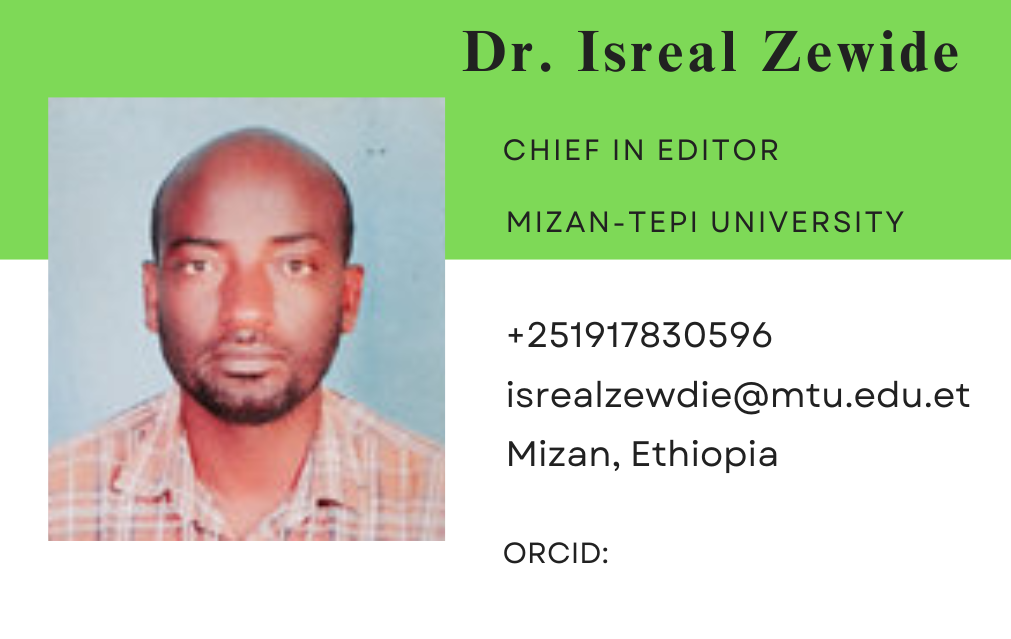
Dr. Isreal Zewide is an accomplished Associate Professor in Soil Science at Mizan-Tepi University, with extensive academic qualifications including a Ph.D. in Soil Science from Haramaya University and both MSc and BSc degrees in Horticulture from Jimma University. Over the years, he has developed significant expertise in soil fertility, acid soil management, and integrated nutrient use, supported by numerous professional trainings in biofertilizer use, GIS, and statistical research methods. His academic journey is complemented by a strong commitment to education and mentoring, having served as a lecturer and later as a research director and assistant professor before attaining his current rank.
Throughout his career, Dr. Isreal Zewide has made substantial contributions to scientific research, particularly in soil science and sustainable agriculture. He has authored over 40 publications in reputable international journals, addressing critical issues like soil acidity management, integrated nutrient use, organic farming, land degradation, and the effects of climate change on crop productivity. His research has not only enhanced scientific understanding but also offered practical solutions for improving crop yield and soil health in Ethiopia, with a special focus on potato and cereal production systems.
In addition to his academic and research accomplishments, Dr. Isreal Zewide is actively engaged in several ongoing projects that aim to assess and model the impacts of land use and climate change on soil quality and agricultural productivity in Southwestern Ethiopia. His work involves advanced applications of GIS and multi-criteria modeling for land suitability evaluation. As a member of professional societies in soil science, horticulture, and forestry, Dr. Zewide continues to collaborate with local and international scholars, contributing to the advancement of environmental sustainability and food security through research, teaching, and community engagement.
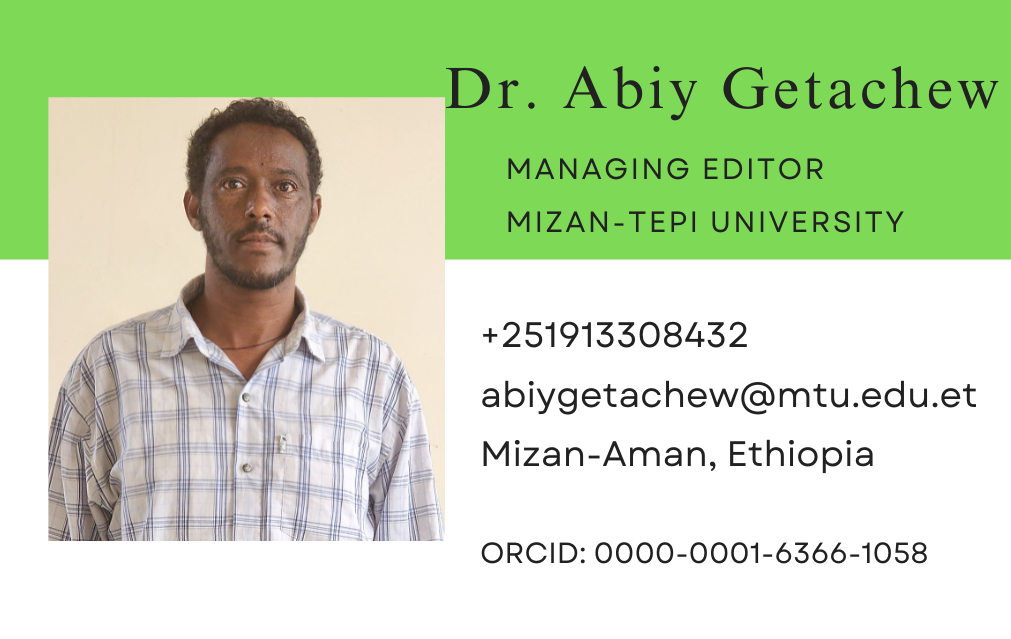
Dr. Abiy Getachew Mengistu, an Assistant Professor specializing in surface water management and engineering, obtained his doctoral degree from Addis Ababa University. He currently works in the Department of Natural Resource Management at the College of Agriculture and Natural Resources, Mizan-Tepi University, Ethiopia. His research is centered on examining hydrological processes influenced by climate and land use changes. Dr. Abiy's expertise includes climate impact modeling, land use and land cover change impact modeling, flood and drought assessments, and surface water resource management. He has made significant contributions to reputable journals, particularly focusing on future climate change scenarios, land use and land cover change modeling under various conditions, and their effects on river basin hydrology.
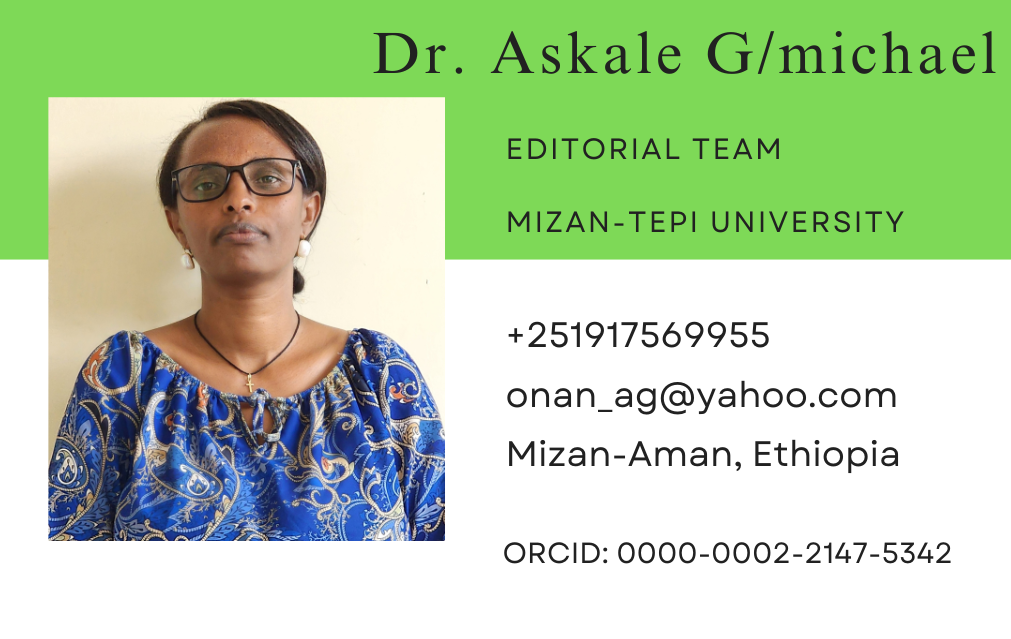
Askale Gebremichael PhD in Animal Science (Aquaculture Applied Fish Biology) Mizan-Tepi University department of Animal Science. 16+ years of teaching experience at HEI Publication experience in international journals more than 15 articles and scientific paper presentations on international and national conference events in four different countries Board membership contributions (Bonga University and KAD). Leadership roles as Academic vice dean for College of Agriculture and Natural Resources 2014_2017 and Director for Research, Publication Ethics and Dissemination Office March 2024 up-to-date
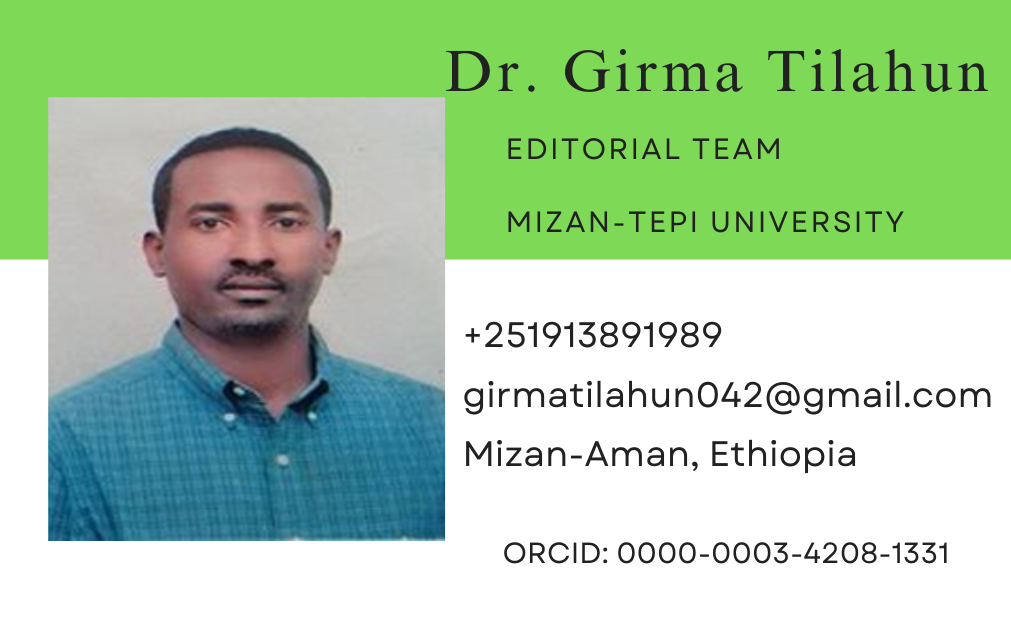
Girma Tilahun Getnet is an Assistant Professor in Food Security and Development with extensive experience and management skills and works in the areas of Food Security, Climate Change, Disaster Risk Management, Natural Resource Management, Environmental Science, Livelihood Development and Sustainable Development. He is currently working as V/President for Research, and Community Engagement at Mizan Tepi University (MTU). Before joining MTU, He served as research Directorate Director, Strategic Partnership Directorate Director, Delegate V/President for Business and Development, Senior researcher and Lecturer at Bonga University and the University of Gondar. Girma holds a PhD in Food Security and Development, an MSc in Agroecology and Sustainable Development and a BSc in Forestry. He supervised more than 22 MSc students and published more than 20 articles in international reputable journals.
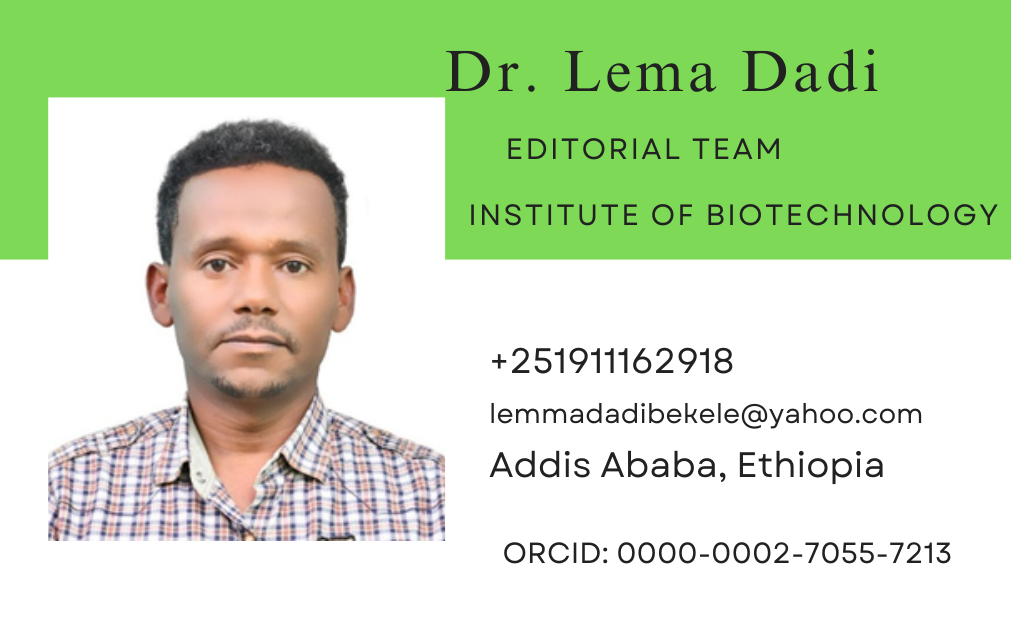
Dr. Lemma Dadi is a distinguished academic and researcher in the field of veterinary medicine and biochemical engineering, known for his significant contributions to veterinary microbiology and agricultural research. His educational journey began at Addis Ababa University, where he earned his Doctor of Veterinary Medicine (DVM) degree. This foundational training equipped him with essential skills and knowledge that would serve as the cornerstone of his career in veterinary science.
Following his DVM, Dr. Lemma pursued further specialization in veterinary microbiology, obtaining a Master of Science (MSc) degree from the same institution. His research during this period focused on understanding microbial zoonotic diseases affecting both humans and livestock, which is critical for improving public and animal health in Ethiopia and beyond. Driven by a desire to expand his expertise, Dr. Lemma then traveled to China, where he completed his Doctorate in Biochemical Engineering at Nanjing Tech University. His PhD research explored innovative approaches in synthesis of biomaterials and biochemical processes, further enhancing his ability to integrate life science with engineering principles.
Dr. Lemma took on various leadership roles at Mizan-Tepi University, where he served as the Dean of the College of Agriculture and Natural Resources. In this capacity, he was instrumental in developing academic programs that addressed the needs of the community and the environment. He also held the position of Director of the School of Graduate Studies, overseeing the advancement of graduate education and research initiatives. In addition to these roles, Dr. Lemma directed the Institute of Research and Community Services at Mizan-Tepi University, where he fostered collaborations between academia and local communities, promoting sustainable practices and applied research that benefited the region. In his leadership period her endeavored to create enabling condition for research and community services that includes establishing agricultural research plots amounted to more than 650 hectares of land.
Currently, Dr. Lemma Dadi serves as a senior researcher at the Ethiopian Bio and Emerging Technology Institute (BETIn). In this role, he continues to engage in groundbreaking research that aims to enhance environmental circularity, safely, protection, biomaterials and bioenergy in Ethiopia. His work emphasizes the importance of integrating biological sciences with engineering practices, addressing challenges associated with depletion of fossil-based resources and environmental pollution. His work has resulted in numerous scientific publications, advancing knowledge in life science and biochemical engineering. Dr. Lemma's commitment to education, research, and community service has made him a respected figure in his field. His contributions have had a lasting impact on veterinary medicine and agricultural research in Ethiopia, inspiring future generations of scientists and researchers.
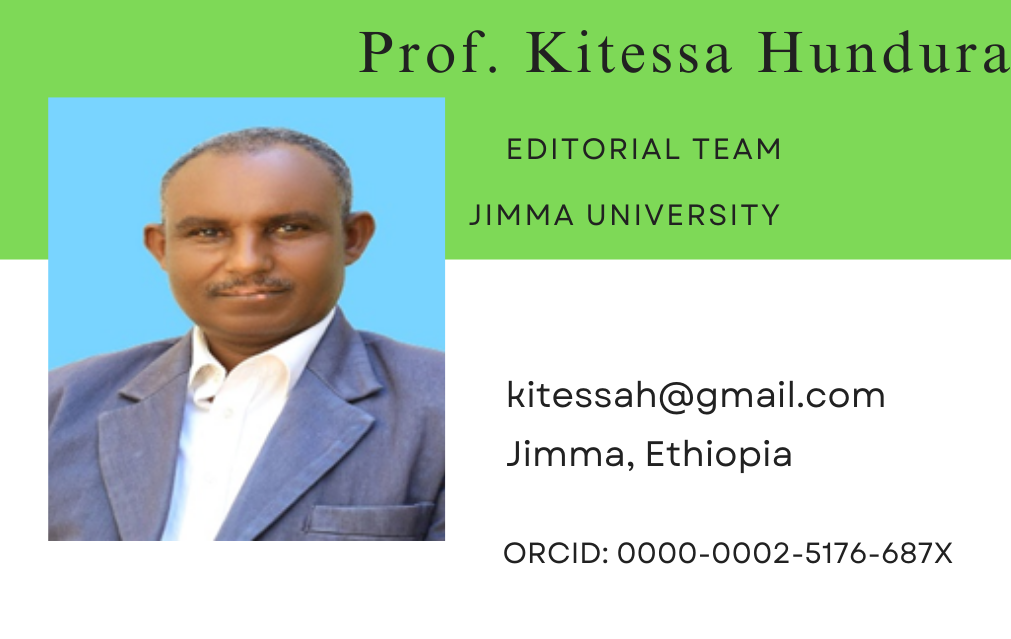
Kitessa Hundera is a professor of forest ecology and management at Jimma University with PhD in forest ecology from the Catholic University of Leuven, Belgium and an MSc in botanical sciences from Addis Ababa University, Ethiopia. He is delivering courses in both at MSc and PhD levels in areas of ecology, conservation, biodiversity and climate change, taxonomy and Ethnobotany. He supervised more than 40 MSc and 2 PhDs who completed their study and still supervising 10 PhD candidates at the Department of Natural Resources and Biology at Jimma University. Besides teaching, he served as an Editor-in-Chief for the Ethiopian Journal of Education and Sciences published by Jimma University for 5 years and also the editorial board member for 10 years. He is still an editorial member of the Gada Journal published by the Institute of Oromo Studies, Jimma University. He published more than 50 peer-reviewed research articles in internationally and nationally reputable journals.

Dr. Lulit Tilahun Wolde is an assistant professor at the Institute of Biotechnology (IoB), AAU. She hasmore than 10 years’ experience in teaching at three different government universities. Currently she isengaged in the academics as well as in research at IoB. In the past, Dr. Lulit had been involved in research activities, including for her PhD, that helped her interact with the Afar communities. She also has the passion to study how life adapt in extreme environments such as the very acidic Dallol ponds and the very alkaline lakes in the Ethiopian rift valley. She had the opportunity to be a research fellow at Brown University, USA and Max Plank Institute, Germany (https://www.uni-muenster.de/Cells-in-Motion/newsviews/2017/08-09.html) to study the extremophiles of Danakil Depression. In addition, she trained in the Netherlands to use microbes for nano technology, in Kenya to interpret molecular data using different bioinformatic tools and in India the important biosafety rules to consider in Biotechnology. Her research results have also been published with well-known international publishers as scientific journal articles and book chapter. In addition, Dr. Lulit was also involved in projects designed for developing and formulating marketable hair and skin care products from special plants claimed by the local communities from Afar Region. Nowadays, she is the principal investigator for a locally funded project titled “Isolation, Identification and optimization of biogenic crystal forming microorganism to improve soil material for traditional housing development and repairing cracks on monolithic buildings and monuments” Dr. Lulit believes that science, technology and indigenous knowledge are fundamentals to find long-lasting solutions to the multi-faceted global problems. Hence, together with her fellow female scientists, she founded an NGO known as Enqunesh Life for Life that promote the importance of linking indigenous knowledge with technology for maximum benefit and served as a managing Board member and Vice President respectively. Dr. Lulit has a PhD and Master’s degrees in Biotechnology and a Bachelor’s degree in Applied Biology
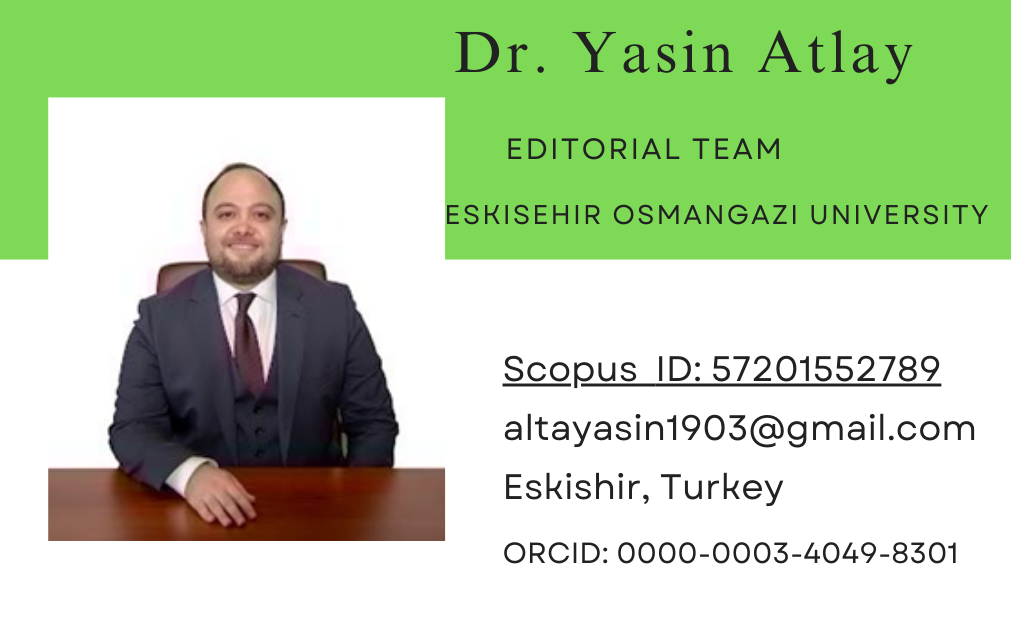
Yasin ALTAY graduated from Selçuk University, Faculty of Agriculture, Department of Animal Science in 2010. In 2013, he completed his master's degree in Selçuk University, Institute of Science and Technology, Department of Animal Science, Department of Biometry and Genetics, and in 2019, he completed his doctorate in Selçuk University Institute of Science, Department of Animal Science, Department of Biometry and Genetics. He received the title of Associate Professor in the Department of Biometry and Genetics in 2023. He started his academic life as a Research Assistant at Eskişehir Osmangazi University Faculty of Agriculture, Department of Animal Science in 2013, still continues his academic life in the same department.